

CAT6 vs CAT6A vs fibre for commercial sites
KINNEX Team5 min read
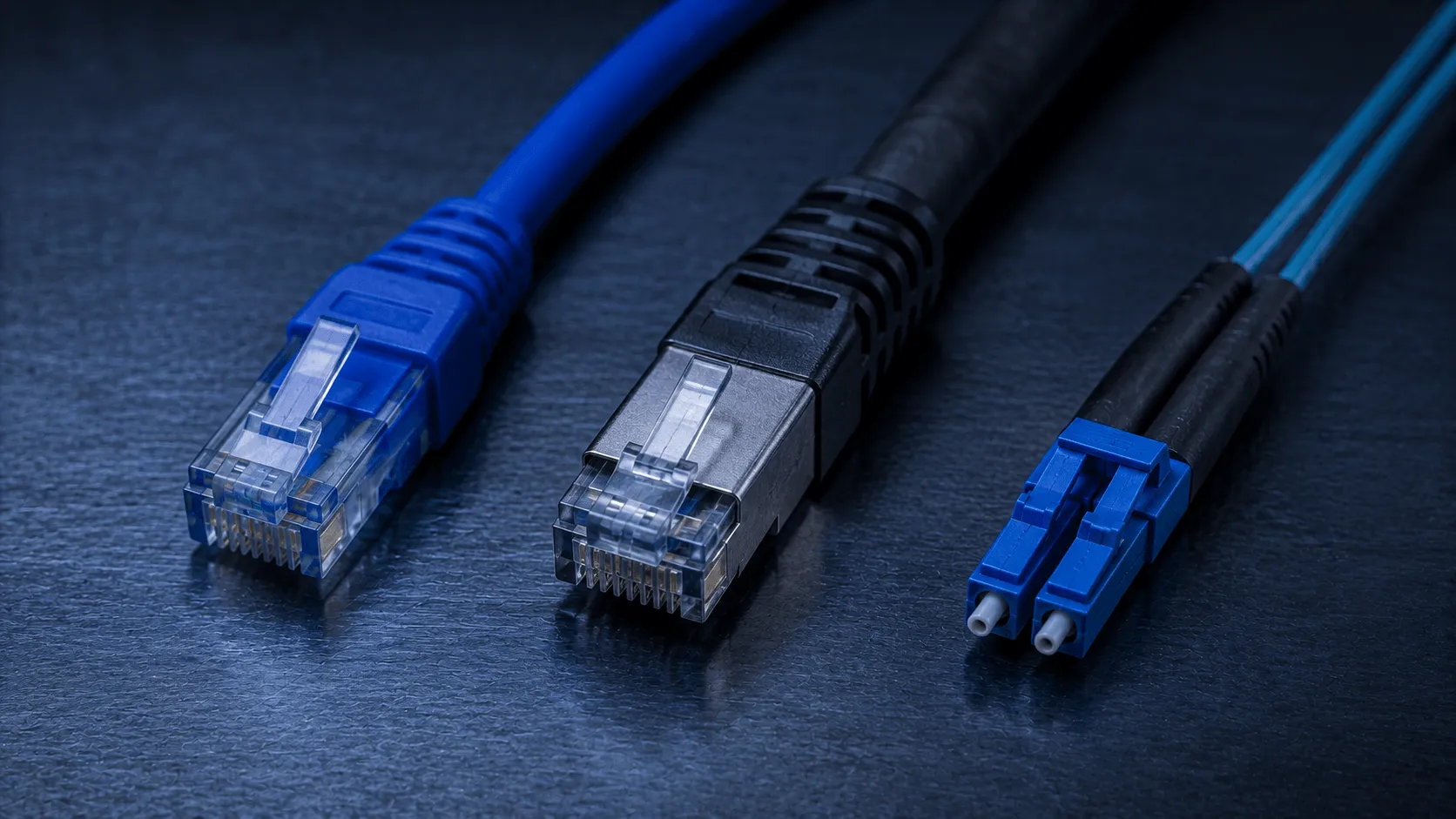
Cabling choice is frequently decided by habit — “we always use CAT6” — rather than by what a specific run actually needs. Each standard has a real trade-off.
CAT6
Supports 10 Gigabit Ethernet up to about 55 metres, or 1 Gigabit reliably to 100 metres. It remains a reasonable default for standard office runs to desks and access points where distances stay under that threshold and near-term bandwidth needs are modest.
CAT6A
Supports the full 10 Gigabit Ethernet standard to 100 metres, with better shielding against interference. It costs more and is thicker — meaning more conduit and containment space — but it is the safer choice for any run that might need to carry higher bandwidth in the next several years, or that runs near sources of electrical interference.
Fibre
Used for backbone links — between floors, buildings or racks — where distance rules out copper entirely, or where electrical isolation is needed. Multi-mode fibre suits shorter backbone runs within a building; single-mode fibre is used for longer inter-building links.
Making the actual decision
The right choice depends on three questions for each run: how far does it need to go, how much bandwidth will it realistically need in the next five years, and is it exposed to electrical interference. A structured cabling plan answers these per-run rather than applying one standard everywhere — which is also why an as-built cabling diagram, not just a labelling scheme, is worth insisting on at handover.