

IT Procurement and Licensing
Requirement validation and BOM creation so procurement decisions are grounded in what the environment actually needs.
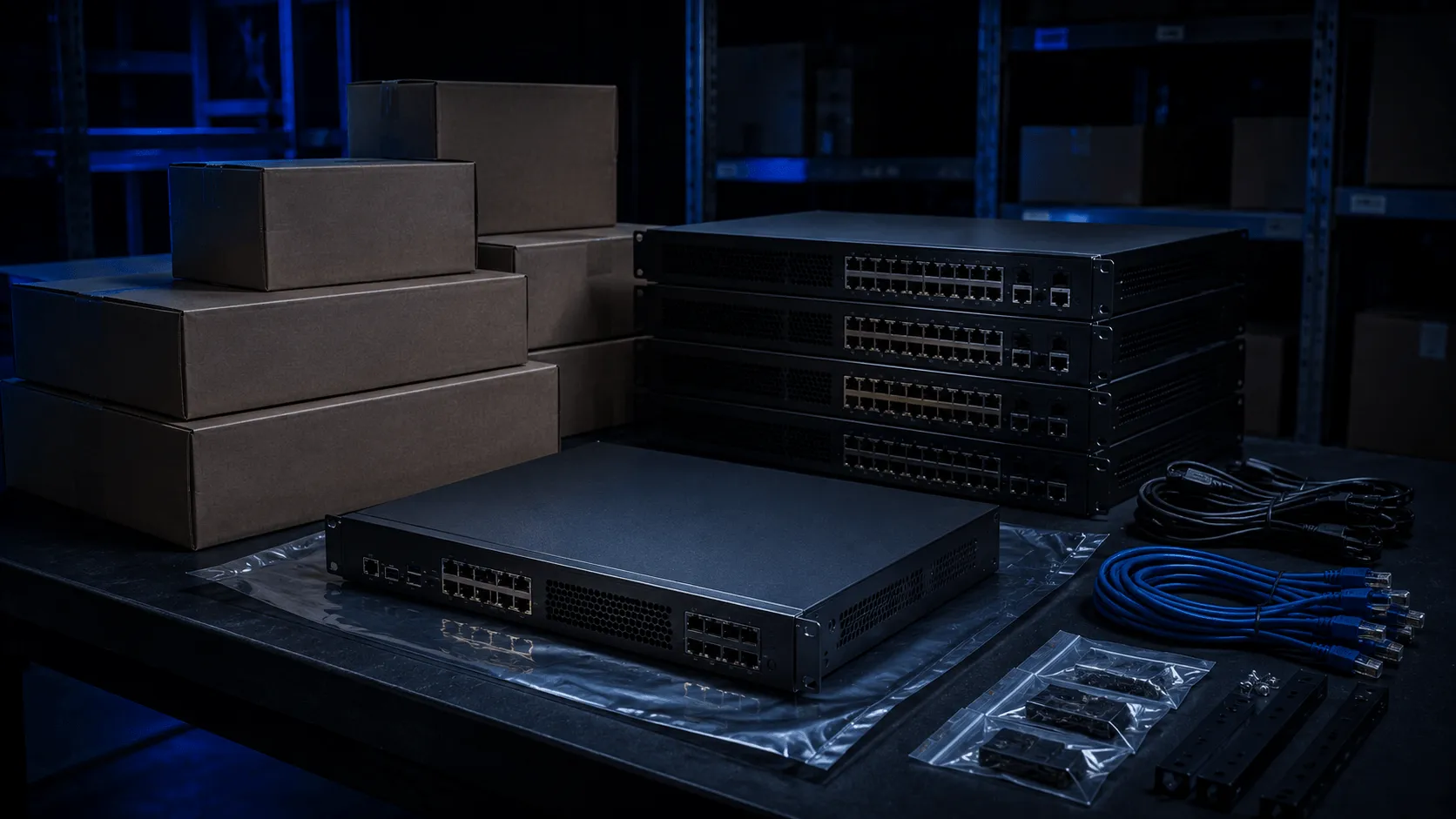
Reference system
Symptoms
When this matters
If any of these describe your environment, this is the conversation to have.
- 01Purchasing decisions are made device by device, with no multi-location standard.
- 02Software licences are tracked in someone's memory rather than a register.
- 03Warranty and RMA processes are unclear when hardware fails.
- 04A refresh cycle exists on paper but is rarely followed in practice.
- 05A large project needs a bill of materials that a single vendor cannot supply consistently.
Scope
What KINNEX delivers
Procurement is treated as an engineering input, not a shopping list — a bill of materials is validated against the actual requirement before sourcing begins, and warranty and licensing are tracked long after delivery, not just at the point of sale.
- Laptops, desktops, workstations, servers, storage, networking, security, CCTV and peripherals.
- OEM software licensing, renewal planning, compliance and usage optimisation.
- Requirement validation, BOM creation, equivalent options and lead-time management.
- Warranty, RMA, asset tagging, deployment and documentation.
- Project supply and multi-location standardisation.
Use cases
Where this shows up
Typical situations that lead an organisation to this work.
01
A project requiring a multi-vendor bill of materials sourced and tracked as one order.
02
A business standardising hardware and licensing across several branch locations.
03
An organisation that has lost track of which software licences are active or expiring.
Delivery method
How the work runs
Architecture before equipment. Validation before handover.
1ASSESS
Requirement gathering and validation against actual use case and budget.
2DESIGN
BOM creation with equivalent options and lead-time realities factored in.
3IMPLEMENT
Sourcing, staging, asset tagging and deployment.
4VALIDATE
Delivery and configuration checks against the approved BOM.
5DOCUMENT
Asset register, warranty log and licensing record.
6SUPPORT
RMA coordination, renewal tracking and refresh planning.
Technology fit
Categories KINNEX works with. Brand names appear only once partner status is verified.
- Laptops, desktops, workstations and servers
- Networking, security and CCTV hardware
- OEM software and licensing platforms
- Asset-tagging and inventory tools

Questions
Frequently asked questions
Yes — lead-time and availability are checked during BOM creation, and equivalent options are proposed with the trade-offs explained rather than causing a project delay.
Licences are tracked with renewal dates and usage against entitlement, so you are not caught by a lapsed or over-deployed licence.
KINNEX coordinates the RMA process with the OEM directly, so you are not left managing the vendor relationship yourself.
Yes — a documented hardware and licensing standard is one of the most effective ways to reduce support complexity across branches.
For any project beyond a handful of items, yes — it gives both sides a clear, agreed scope before commitments are made.
Share a procurement requirement
Tell us the site, the constraint or the outcome you need, and we will come back with the right next step.