

Cybersecurity and Firewalls
Firewall policy, segmentation and endpoint protection designed around how your organisation actually operates.
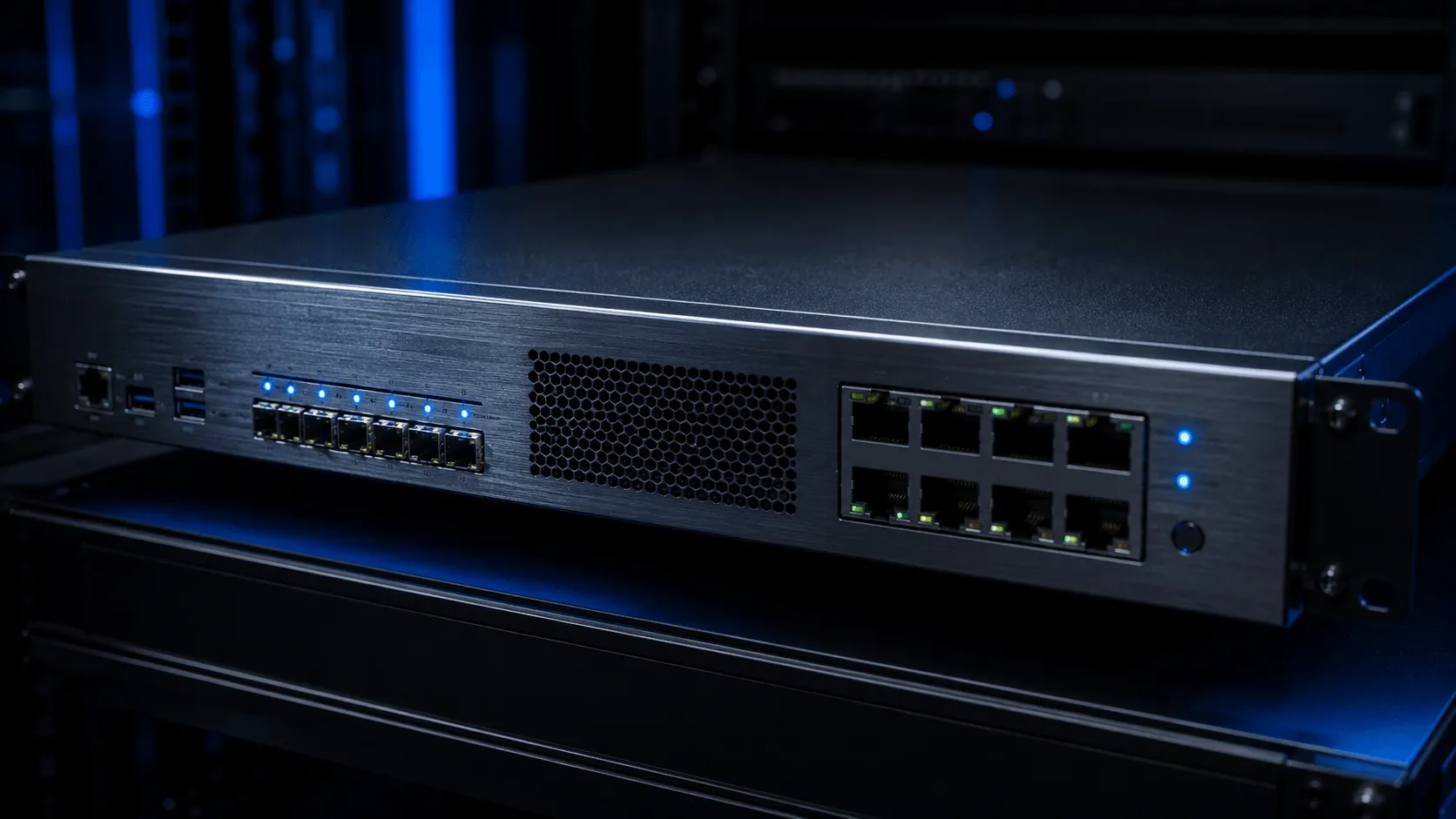
Reference system
Symptoms
When this matters
If any of these describe your environment, this is the conversation to have.
- 01The current firewall was sized for a smaller team or was never properly configured.
- 02Guest Wi-Fi, CCTV and core business systems all sit on the same trust zone.
- 03Remote staff connect back to the office without a defined secure-access method.
- 04Backup exists, but nobody has tested whether a restore actually works.
- 05Security subscriptions and licence renewals are tracked by nobody in particular.
Scope
What KINNEX delivers
Security is treated as an architecture decision, not a single appliance. KINNEX designs trust zones around how users, servers, CCTV and guests actually move through your network, so a compromise in one area does not become a compromise of everything.
- Next-generation firewall sizing, policy, web filtering, application control, VPN and reporting.
- Network segmentation for users, servers, CCTV, guest Wi-Fi, OT or sensitive systems.
- Endpoint protection, secure configuration, patching and identity controls.
- ZTNA or secure remote access, email security, backup and recovery readiness.
- Security posture reviews, incident readiness and remediation planning.
- Licensing and renewal visibility — an active SOC or round-the-clock monitoring is only implied when contracted and staffed.
Use cases
Where this shows up
Typical situations that lead an organisation to this work.
01
A business whose firewall has never been reviewed since initial installation.
02
An organisation isolating CCTV and guest Wi-Fi from core business systems for the first time.
03
A team moving from ad-hoc remote access to a managed secure-access solution.
Delivery method
How the work runs
Architecture before equipment. Validation before handover.
1ASSESS
Posture review across network, endpoints, remote access and backup readiness.
2DESIGN
Firewall policy, segmentation plan and remote-access architecture.
3IMPLEMENT
Firewall deployment, endpoint rollout and secure remote-access configuration.
4VALIDATE
Policy testing, segmentation verification and backup restore tests.
5DOCUMENT
Trust-zone diagram, policy reference and renewal calendar.
6SUPPORT
Ongoing licence and renewal management, plus periodic posture reviews.
Technology fit
Categories KINNEX works with. Brand names appear only once partner status is verified.
- Next-generation firewall (NGFW) platforms
- Endpoint protection and patch management
- ZTNA and VPN secure remote-access gateways
- Backup and recovery platforms



Reading
Related insights

Cybersecurity and Firewalls
What a firewall project includes beyond the appliance
Buying a firewall and deploying one properly are two different projects — here is what the second one actually involves.

Cybersecurity and Firewalls
How network segmentation protects business systems and cameras
Why putting everything on one flat network is the single most common finding in a security review — and what segmentation actually looks like in practice.
Questions
Frequently asked questions
By throughput needs, user and device count, VPN concurrency and the number of segments required — sized from your actual environment, not a generic recommendation.
Policy is tuned to your traffic, segments are defined, and reporting is set up — a firewall is a starting point for ongoing policy management, not a one-time appliance swap.
Yes, through VLAN segmentation and firewall policy that keeps each traffic class on its own trust zone.
Scope is defined per contract — from basic alerting to more active monitoring — and KINNEX will not describe a service as round-the-clock SOC coverage unless it is actually staffed and contracted that way.
Licence terms and renewal dates are tracked centrally and flagged ahead of expiry, so protection does not lapse silently.
Review your security architecture
Tell us the site, the constraint or the outcome you need, and we will come back with the right next step.