

CCTV and Video Surveillance
Camera placement, storage sizing and control-room design planned from a coverage survey, not a generic camera count.
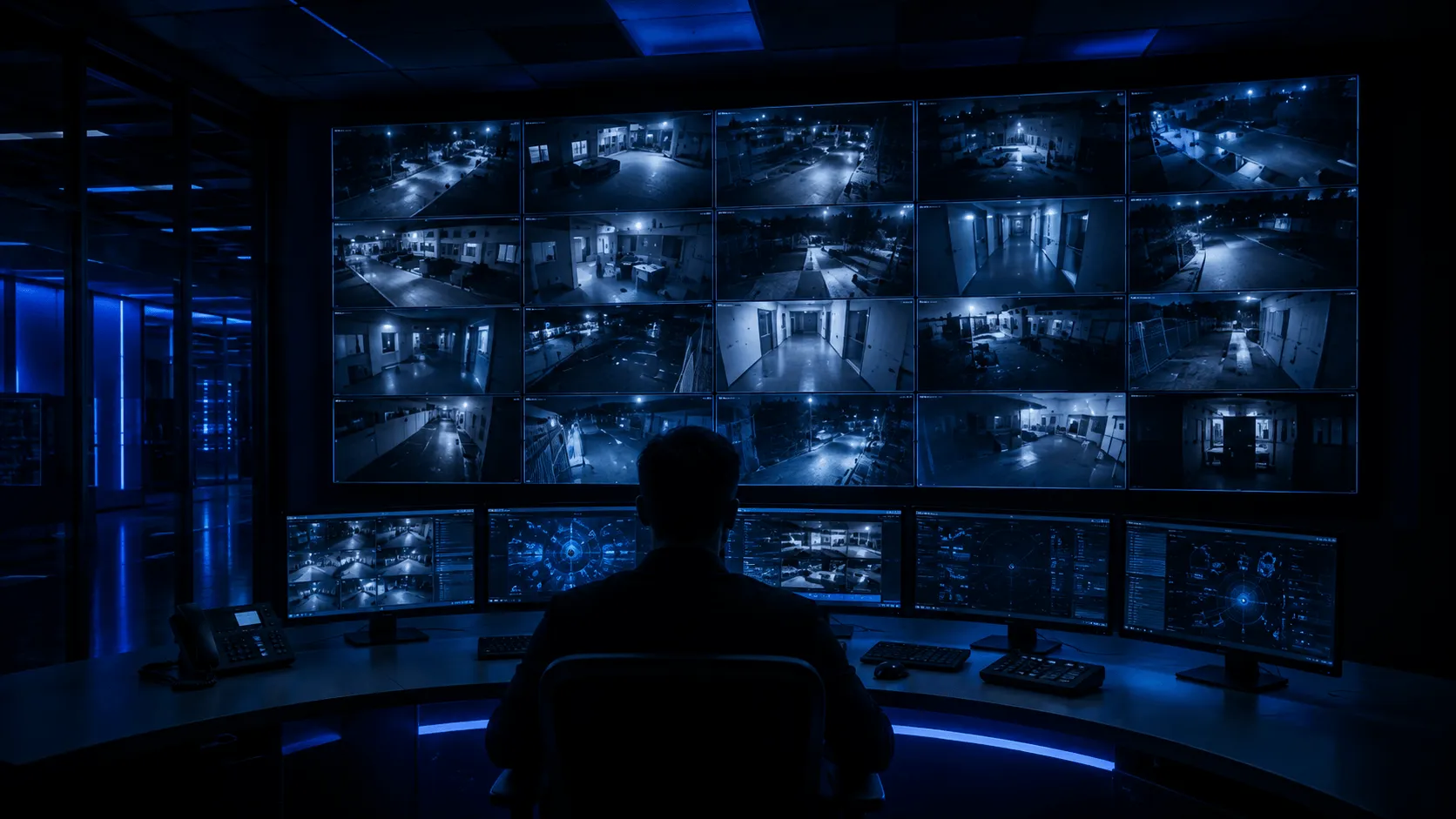
Reference system
Symptoms
When this matters
If any of these describe your environment, this is the conversation to have.
- 01Camera coverage was decided by budget rather than a survey of actual blind spots.
- 02Recordings are lost or overwritten before an incident is even reported.
- 03Nobody can say with confidence how many days of footage the system retains.
- 04Legacy analogue or ageing NVR hardware is failing and needs a migration plan.
- 05Remote viewing exists but access is not properly secured.
Scope
What KINNEX delivers
Surveillance is only as useful as its weakest link — a blind spot, an under-sized disk or an unsecured remote-viewing link undermines the whole system. KINNEX treats CCTV as network infrastructure with a retention policy, not a set of cameras bolted onto a wall.
- Risk and coverage survey, camera type selection, lens and mounting strategy.
- IP camera, NVR or VMS architecture, control rooms, remote access and health monitoring.
- Storage and retention sizing based on camera count, resolution, frame rate, codec, motion and policy.
- Network, PoE, fibre, UPS, time synchronisation and security design for CCTV infrastructure.
- Audits, upgrades, migration from legacy systems and preventive maintenance.
- Analytics such as ANPR or intelligent detection only where accuracy, privacy and environment are assessed.
Use cases
Where this shows up
Typical situations that lead an organisation to this work.
01
A facility with unaddressed blind spots identified only after an incident.
02
A legacy analogue CCTV system being migrated to IP with minimal disruption.
03
A control room that needs centralised viewing across multiple sites.
Delivery method
How the work runs
Architecture before equipment. Validation before handover.
1ASSESS
Coverage and risk survey, lighting conditions and existing infrastructure review.
2DESIGN
Camera type, lens, mounting and storage/retention architecture.
3IMPLEMENT
Camera installation, network cabling, PoE, NVR/VMS and control-room setup.
4VALIDATE
Field-of-view verification, recording checks and remote-access security review.
5DOCUMENT
Camera schedule, retention policy and network diagram.
6SUPPORT
Health monitoring, preventive maintenance and periodic coverage audits.
Technology fit
Categories KINNEX works with. Brand names appear only once partner status is verified.
- IP camera and video management system (VMS) platforms
- Network video recorders (NVR) and enterprise storage
- PoE switching for camera power and data
- Secure remote-viewing gateways
Environments
Where this applies


Reading
Related insights

CCTV and Video Surveillance
How to size CCTV storage retention without guessing
A practical walkthrough of the variables that actually determine how many days of footage a CCTV system can retain.

CCTV and Video Surveillance
A practical CCTV health-audit checklist
Most CCTV failures are discovered during an incident review, not before. Here is what a proactive health audit actually checks.
Questions
Frequently asked questions
Retention is a design decision, sized from camera count, resolution, frame rate, codec and motion activity against your required retention policy — not left to whatever the default hardware provides.
Through a physical coverage survey of the site, mapping fields of view against entry points, high-value areas and known risk zones.
Where condition and specification allow, yes — the survey identifies what can be retained and what needs replacing rather than assuming a full rip-and-replace.
Through authenticated, encrypted remote-access design rather than exposing NVR or camera interfaces directly to the internet.
Health monitoring is set up to flag failures early, and preventive maintenance visits catch degrading hardware before it causes a full outage.
Request a surveillance site survey
Tell us the site, the constraint or the outcome you need, and we will come back with the right next step.