

Writing a BOM that survives hardware lead times
KINNEX Team4 min read
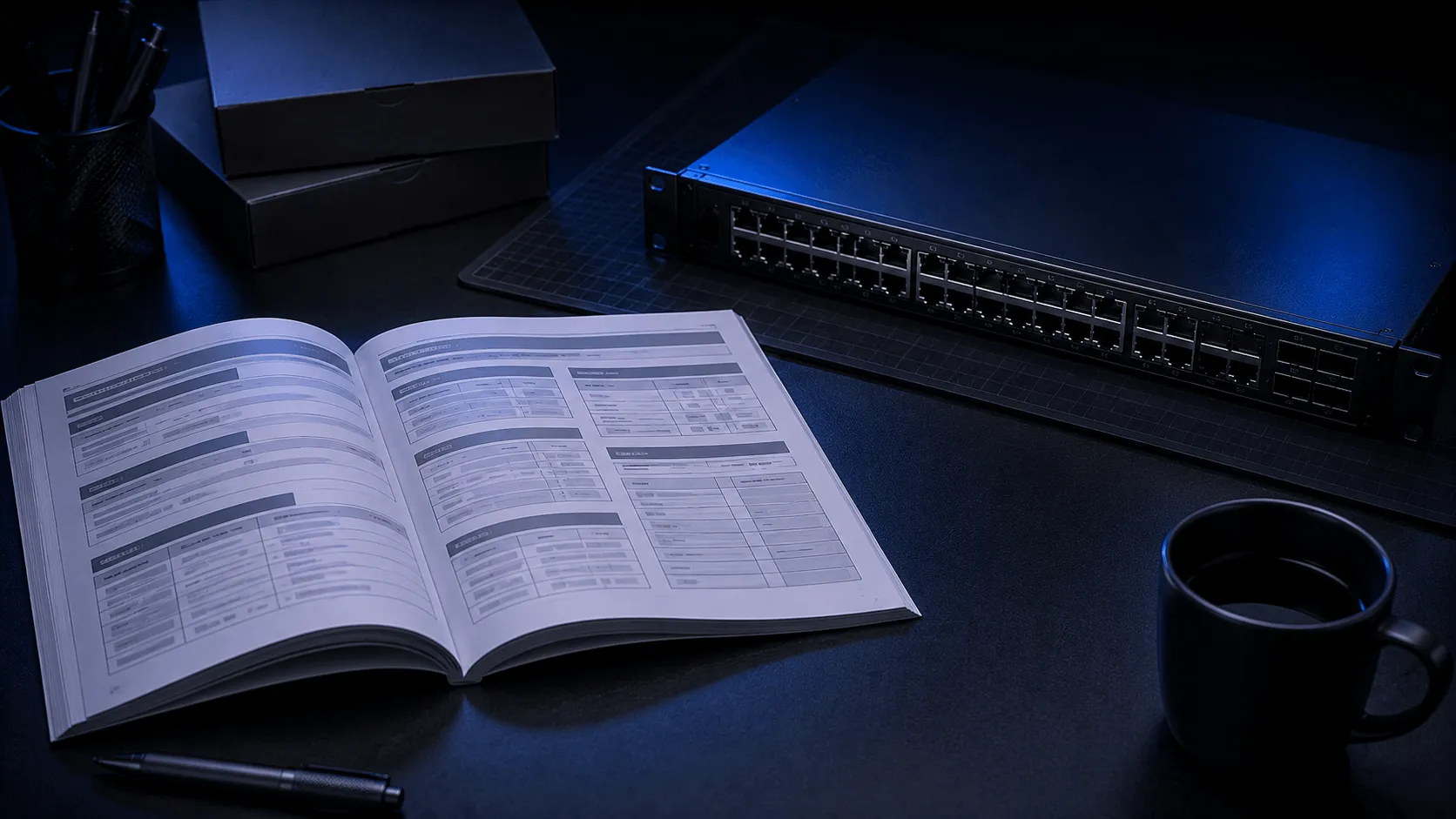
A bill of materials that names one exact model per line item looks precise. It’s also the version most likely to stall a project the moment that specific model goes out of stock or its lead time stretches past what the project can absorb.
The single-model trap
Hardware availability shifts — a switch model, a specific camera SKU, or a particular server configuration can move from in-stock to a multi-week lead time with no warning. A BOM built around one exact part per line, with no fallback specified, forces a scramble to find and validate an alternative under time pressure, exactly when there’s least time to do it properly.
What a resilient BOM actually includes
- A primary choice and at least one pre-validated equivalent per significant line item, so a substitution decision doesn’t need to be made from scratch when the primary is unavailable.
- The actual requirement behind each spec, not just a model number — so an equivalent can be judged against what it needs to do, not just how closely it resembles the original part number.
- Realistic lead-time assumptions, checked at the time of ordering rather than assumed from the last project.
- A clear owner for approving substitutions, so a like-for-like swap doesn’t sit waiting for a decision nobody was assigned to make.
Where this matters most
Projects with many similar line items — a multi-site rollout, a large camera deployment, a fleet of workstations — are where this pays off most, because a single unavailable part can otherwise hold up an entire batch. A BOM built with equivalents in mind from the start turns a supply hiccup into a same-day substitution instead of a week of delay.